Upcoming Event: Oden Institute Seminar
Efficient Exascale Thermal-Fluids and MHD Simulations
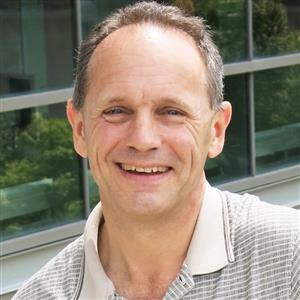
Paul Fischer, Professor, Department of Computer Science, University of Illinois at Urbana-Champaign
3:30 – 5PM
Tuesday Dec 1, 2026
POB 6.304 and Zoom
Abstract
This talk presents an overview of spectral element simulations of turbulent thermal-fluids and MHD transport performed with Nek5000/RS. We describe implementations of high-order numerical discretizations having per-grid point costs comparable to or lower than low-order methods that, for advection-dominated problems, also require less resolution. We present a variety of scalable preconditioning strategies for the Poisson substep that is required for the pressure solve in the case of incompressible Navier-Stokes and for the electric potential that arises in inductionless MHD formulations. We are particularly focused on the range of 103–105 MPI ranks, where each rank is associated with a GPU capable of realizing ≈ 1 TFLOPS. These parameters influence design choices, particularly when running at the maximum-performance, strong-scale, limit where 80–100% parallel efficiency is sustained. Numerous examples throughout the presentation, including recent trillion gridpoint simulations on DOE’s LCF facilities, illustrate the effectiveness of spectral elements for this class of problems.
Biography
Paul Fischer is a Professor in the departments of Computer Science and Mechanical Science & Engineering at the University of Illinois, Urbana Champaign, and a senior scientist in the Mathematics and Computer Science division at Argonne National Laboratory. He has published over 200 articles on high-order numerical methods, parallel computing, scalable iterative solvers, fluid mechanics and heat transfer. Fischer holds degrees in mechanical engineering from Cornell (B.S. '81), Stanford (M.S. '82) and MIT (Ph.D. '89). He was a postdoc at Caltech in Applied Mathematics, where he was the inaugural recipient of the Center for Research in Parallel Computation Prize Fellowship. He was on the Applied Math faculty at Brown before joining Argonne. Fischer pioneered the development of spectral element methods for high-performance simulations of turbulence, including the development of Nekton 2.0, which was the first commercial software for distributed-memory parallel computers. The open source research variant, Nek5000, is a Gordon Bell Prize winner and has scaled to millions of ranks on Mira and Sequoia. NekRS, the GPU variant, scales to all of Frontier and was a 2023 Gordon Bell Finalist. Nek5000/RS is used by over 500 researchers in industry and academia. Fischer's current research is focused on advanced preconditioners for GPU-based solutions of PDEs and reduced-order models for turbulent flows with applications to industrial problems.
Event information
Tuesday Dec 1, 2026